
Sci-Faith & Fantasy Book Club
A book club about fantasy, science fiction, and other genre fiction (horror, the New Weird, alt-history, magical realism, mystery, etc.) which engages religion significantly in some way, and which takes faith seriously (even if, in some cases, also humorously).
Usually third Sunday (with occasional exceptions), 12:30-1:30 p.m. in the Bride’s Room (B6).
Bring a sack lunch, or zip out to one of the many area restaurants for carry-out!
Sci-Faith & Fantasy book club meets third Sunday next month (7/20):
Reading Harry Turtledove’s Ruled Britannia
Do you like sci-fi / fantasy novels (and similar genre fiction) that focuses significantly on religion? Then come check out the Sci-Faith & Fantasy Book Group. We usually meet third Sundays. Our next meeting is 7/20, 12:30; in the Bride’s Room (B6). BYOL.
“In this novel of alternative history from best-selling author Harry Turtledove, the Spanish Armada has conquered England, King Phillip holds the English throne, and Elizabeth I languishes as a prisoner in the Tower of London. Meanwhile, in London, a mysterious stranger approaches young playwright William Shakespeare with an offer that could change the course of history.”
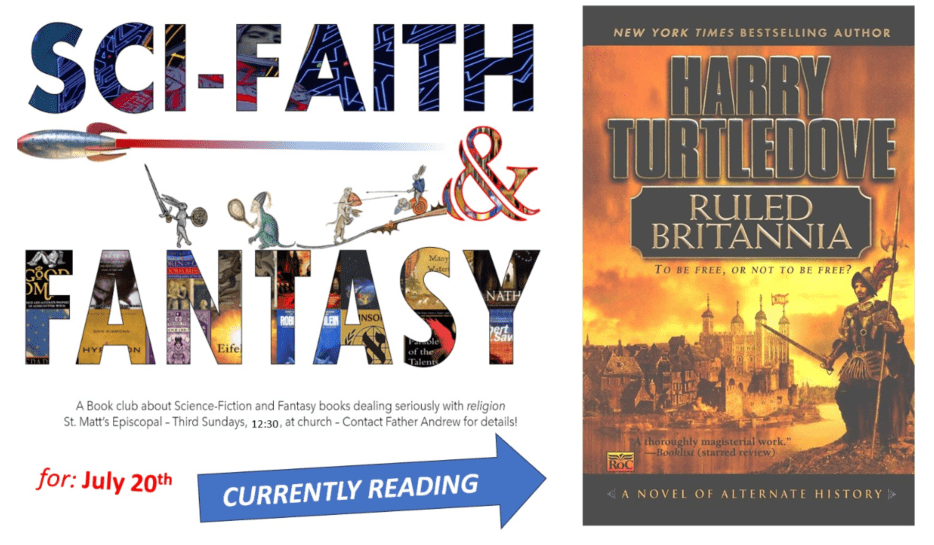
Andrew’s take: For my money, the most fun part of this one is the religious foment in the background. The nascent Reformed Christianity which had taken root during the reign of Henry the VIII and his son, and which had briefly reestablished under Elizabeth, is not outlawed– as it had been during the reign of Blood Mary. Now, Roman Catholicism is once again the Established Church of Britain; and most English folk conform to the required observances, whether begrudgingly or sincerely.
(May 18) — Tooth and Claw by Jo Walton
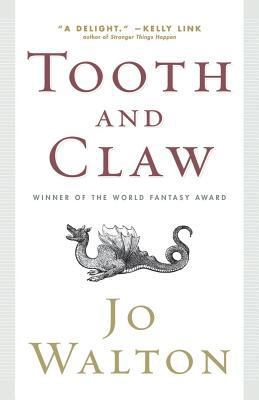 “A family deals with the death of their father. A son goes to court for his inheritance. Another son agonises over his father’s deathbed confession. One daughter becomes involved in the abolition movement, while another sacrifices herself for her husband.And everyone in the tale is a dragon, red in tooth and claw.Here is a world of politics and train stations, of churchmen and family retainers, of courtship and country houses….in which, on the death of an elder, family members gather to eat the body of the deceased. In which the great and the good avail themselves of the privilege of killing and eating the weaker children, which they do with ceremony and relish, growing stronger thereby.You have never read a novel like Tooth and Claw.”
Basically, it’s Jane Austin with dragons. Religion is not the central theme, but it’s in there: One of the point-of-view characters is a country vicar. Their religion has a significant influence over how the dragons structure their society, administer justice (or rather, injustice), and how they understand non-dragons. However, a splinter sect (deeply implicated in the abolutionist movement) whispers that modern doctrine may be a corruption of their original beliefs…
Reading Resources:
• Brief author Q&A
Previous Month’s books and reading resources:
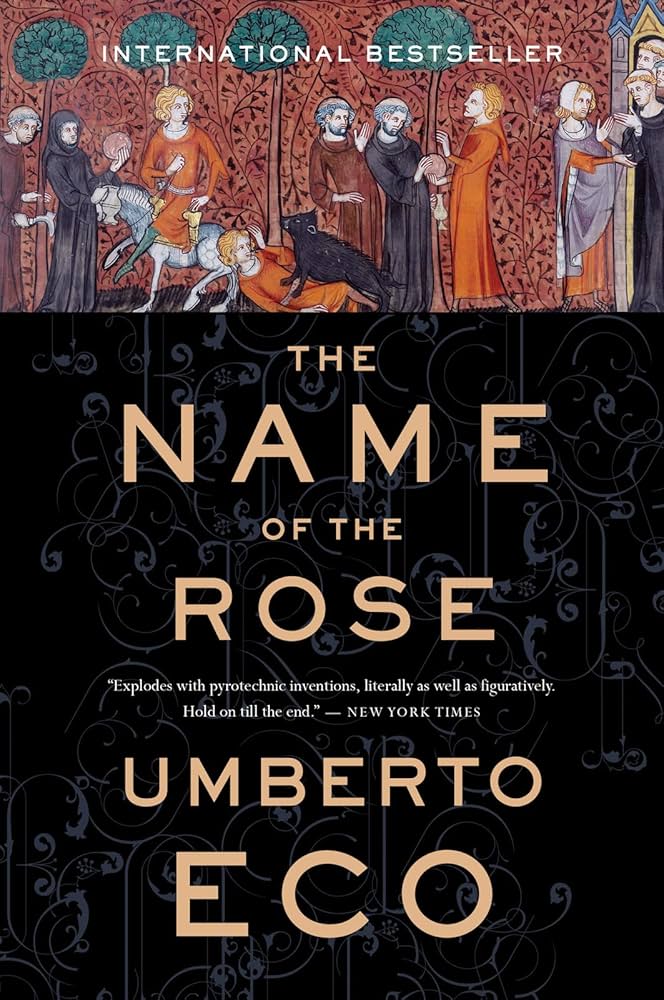 The Name of the Rose by Umberto Eco- (technically mystery, not sci-fi or fantasy…)
“Seven Deaths in Seven Days and Nights of Apocalyptic Terror.
The year is 1327. The place is a wealthy abbey. And the crimes committed here are beyond the wildest imaginings. It will be the task of English Brother William of Baskerville to decipher secret symbols and dig into the eerie labyrinth of abbey life to unravel the mystery. His tools: logic, intelligence, wit, and a ferocious curiosity. His enemy: a murderer with the awesome features of the Antichrist…”
“Italy, 1347. While Brother William of Baskerville is investigating accusations of heresy at a wealthy abbey, his inquiries are disrupted by a series of bizarre deaths. Turning his practiced detective skills to finding the killer, he relies on logic (Aristotle), theology (Thomas Aquinas), empirical insights (Roger Bacon), and his own wry humor and ferocious curiosity. With the aid of his young apprentice, William scours the abbey, from its stables to the labyrinthine library, piecing together evidence, and deciphering cryptic symbols and coded manuscripts to uncover the truth about this place where ‘the most interesting things happen at night.’
First published in 1980, The Name of the Rose became an international sensation, beguiling readers around the world with its mix of history, humor, and intellectual heft.”
- Reading Resources:
• Themes of TNotR from LitCharts: https://www.litcharts.com/lit/the-name-of-the-rose/themes - • Background context: https://www.coursehero.com/lit/The-Name-of-the-Rose/context/
- • Book analysis https://www.alyannadenise.com/the-name-of-the-rose-there-is-no-single-truth/
- • Translations for accompany non-English passages: https://marco.tompitak.com/notr/
Children of God, by Mary Doria Russell
“The only member of the original mission to the planet Rakhat to return to Earth, Father Emilio Sandoz has barely begun to recover from his ordeal when the So-ciety of Jesus calls upon him for help in preparing for another mission to Alpha Centauri. Despite his objections and fear, he cannot escape his past or the future.
Old friends, new discoveries and difficult questions await Emilio as he struggles for inner peace and understanding in a moral universe whose boundaries now extend beyond the solar system and whose future lies with children born in a faraway place.”
Reading Resources:
• Some of the music mentioned in Children of God
• See also Q&A with the author, under The Sparrow
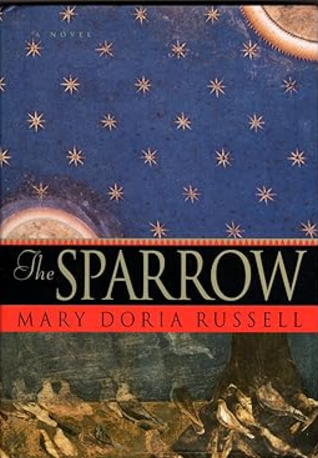
The Sparrow, by Mary Doria Russell
“The Sparrow is a novel about a remarkable man, a living saint, a life-long celibate and Jesuit priest, who undergoes an experience so harrowing and profound that it makes him question the existence of God. This experience–the first contact between human beings and intelligent extraterrestrial life–begins with a small mistake and ends in a horrible catastrophe.”
Winner of the the Arthur C. Clarke Award, James Tiptree Jr. Award, Kurd-Laßwitz-Preis and the British Science Fiction Association Award.
Reading Resources:
• Official reading guide included in most print-copies of the book
• Another Q&A with the author
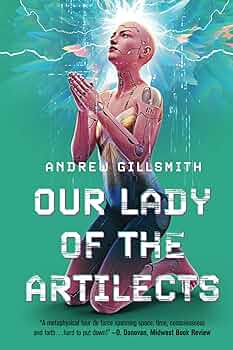 Our Lady of the Artilects, by Andrew Gilsmith
“World leaders are already on edge as Artilects (next generation androids) begin reporting a strange apocalyptic vision that only they can see. But when an Artilect belonging to the wealthiest man in Africa shows up at the Basilica of Our Lady of Nigeria claiming to be possessed, the stakes are raised. The Vatican sends Fr. Gabriel Serafian, an exorcist and former neuroscientist, to investigate. Serafian quickly finds himself swept up in a conspiracy of global–and possibly supernatural–dimensions.
The timing couldn’t be worse. Rome is on the verge of reconciliation with the Chinese Economic Interest Zone after a 50 year cold war, and the Chinese are particularly sensitive about the so-called Apparition. To discover the truth and save not only humanity but the artilects themselves, Serafian enlists the aid of a tough-as-nails Imperial Praetor named Namono Mbambu.
Our Lady of the Artilects is a mind-bending supernatural science fiction novel where The Exorcist meets Westworld, with a light dusting of Snow Crash.”
Eifelheim, by Michael Flynn.
“Over the centuries, one small town in Germany has disappeared and never been resettled. Tom, a historian, and his theoretical physicist girlfriend Sharon, become interested. By all logic, the town should have survived. What’s so special about Eifelheim?
Father Dietrich is the village priest of Eifelheim, in the year 1348, when the Black Death is gathering strength but is still not nearby. Dietrich is an educated man, and to his astonishment becomes the first contact person between humanity and an alien race from a distant star, when their ship crashes in the nearby forest. It is a time of wonders, in the shadow of the plague. Flynn gives us the full richness and strangeness of medieval life, as well as some terrific aliens.
Tom, and Sharon, Father Deitrich have a strange destiny of tragedy and triumph in Eifelheim.”
Reading Resources:
• An appreciation of Eifelheim (a blog entry)
• Map of the Spread of the Black Death in the area around Eifelheim
A Psalm for the Wild-Built by Becky Chambers.
“It’s been centuries since the robots of Panga gained self-awareness and laid down their tools; centuries since they wandered, en masse, into the wilderness, never to be seen again; centuries since they faded into myth and urban legend.
One day, the life of a tea monk is upended by the arrival of a robot, there to honor the old promise of checking in. The robot cannot go back until the question of ‘what do people need?’ is answered.
But the answer to that question depends on who you ask, and how.
They’re going to need to ask it a lot.”
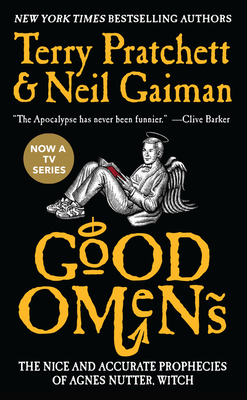 Good Omens, by Neil Gaiman and Terry Pratchett
“According to The Nice and Accurate Prophecies of Agnes Nutter, Witch (the world’s only completely accurate book of prophecies, written in 1655, before she exploded), the world will end on a Saturday. Next Saturday, in fact. Just before dinner.
So the armies of Good and Evil are amassing, Atlantis is rising, frogs are falling, tempers are flaring. Everything appears to be going according to Divine Plan. Except a somewhat fussy angel and a fast-living demon—both of whom have lived amongst Earth’s mortals since The Beginning and have grown rather fond of the lifestyle—are not actually looking forward to the coming Rapture.
And someone seems to have misplaced the Antichrist . . .”
Reading resources for Project Hail Mary:
• “A Comprehensive Theological Reference Guide to Good Omens” (external blog)
• Article about the book/series from The Living Church
• “Lessons on Christian Culture from Good Omens” (from A Pilgrim in Narnia blog)
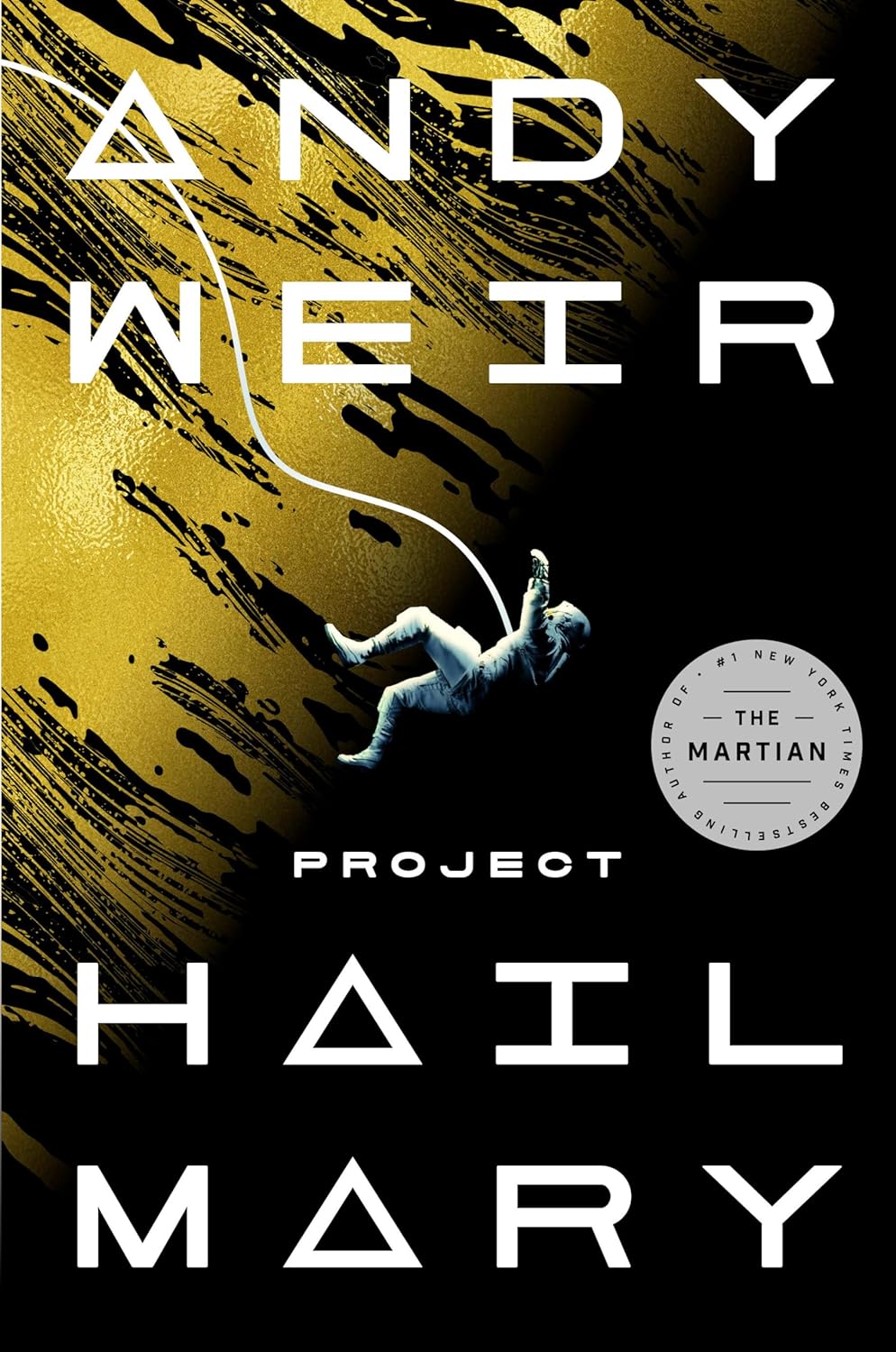 Project Hail Mary by Andy Weir (not overtly focused on religion, so a bit outside our usual fare).
“Ryland Grace is the sole survivor on a desperate, last-chance mission—and if he fails, humanity and the earth itself will perish.
Except that right now, he doesn’t know that. He can’t even remember his own name, let alone the nature of his assignment or how to complete it. All he knows is that he’s been asleep for a very, very long time. And he’s just been awakened to find himself millions of miles from home, with nothing but two corpses for company.
His crewmates dead, his memories fuzzily returning, Ryland realizes that an impossible task now confronts him. Hurtling through space on this tiny ship, it’s up to him to puzzle out an impossible scientific mystery—and conquer an extinction-level threat to our species. And with the clock ticking down and the nearest human being light-years away, he’s got to do it all alone.
Or does he?”
Reading resources for Project Hail Mary:
• Extremely thorough reading guide by Penguin books
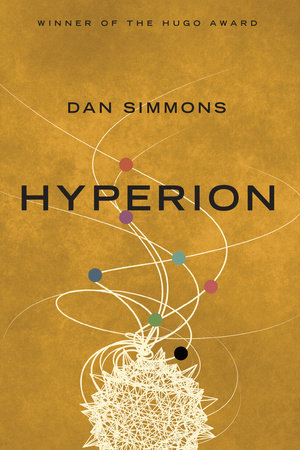 Hyperion by Dan Simmons
“On the world called Hyperion, beyond the reach of galactic law, waits a creature called the Shrike. There are those who worship it. There are those who fear it. And there are those who have vowed to destroy it. In the Valley of the Time Tombs, where huge, brooding structures move backward through time, the Shrike waits for them all.
On the eve of Armageddon, with the entire galaxy at war, seven pilgrims set forth on a final voyage to Hyperion seeking the answers to the unsolved riddles of their lives. Each carries a desperate hope—and a terrible secret. And one may hold the fate of humanity in his hands.”
Reading resources for Hyperion:
• “Hyperion,” by John Keats
• Chaucer’s “The Canterbury Tales,” on which the novel is loosely is based
• a glossary of terms and references in the novel
• The Hyperion Cantos wiki, an online reference about the setting of Simmon’s Hyperion series
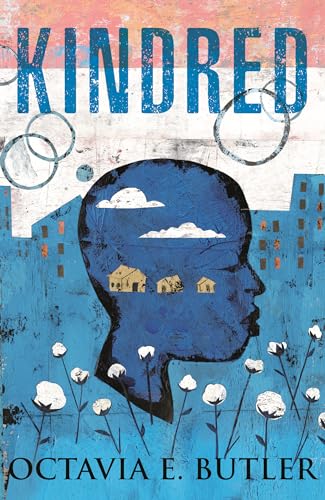 Kindred, by Octavia Butler
(more fantastical time-travel than “sci-fi”; and less overtly about religion than our usual fare)
“I lost an arm on my last trip home. My left arm.”
The visionary time-travel classic whose Black female hero is pulled through time to face the horrors of American slavery and explores the impacts of racism, sexism, and white supremacy then and now.
Dana’s torment begins when she suddenly vanishes on her 26th birthday from California, 1976, and is dragged through time to antebellum Maryland to rescue a boy named Rufus, heir to a slaveowner’s plantation. She soon realizes the purpose of her summons to the past: protect Rufus to ensure his assault of her Black ancestor so that she may one day be born. As she endures the traumas of slavery and the soul-crushing normalization of savagery, Dana fights to keep her autonomy and return to the present.
Many Waters, by Madeleine L’Engle
Sandy and Dennys have always been the normal, run-of-the-mill ones in the extraodinary Murry family. They garden, make an occasional A in school, and play baseball. Nothing especially interesting has happened to the twins until they accidentally interrupt their father’s experiment.
Then the two boys are thrown across time and space. They find themselves alone in the desert, where, if they believe in unicorns, they can find unicorns, and whether they believe or not, mammoths and manticores will find them.
The twins are rescued by Japheth, a man from the nearby oasis, but before he can bring them to safety, Dennys gets lost. Each boy is quickly embroiled in the conflicts of this time and place, whose populations includes winged seraphim, a few stray mythic beasts, perilous and beautiful nephilim, and small, long lived humans who consider Sandy and Dennys giants. The boys find they have more to do in the oasis than simply getting themselves home–they have to reunite an estranged father and son, but it won’t be easy, especially when the son is named Noah and he’s about to start building a boat in the desert.
Out of the Silent Planet, by C.S. Lewis (book one of his “Space Trilogy”)
“Written during the dark hours immediately before and during World War II, C.S. Lewis’s Space Trilogy, of which Out of the Silent Planet is the first volume, stands alongside such works as Albert Camus’s The Plague and George Orwell’s 1984 as a timeless classic, beloved by succeeding generations as much for the sheer wonder of its storytelling as for the significance of its moral concerns.
While searching for a place to rest for the night, Dr. Elwin Ransom is abducted by a megalomaniacal physicist and his accomplice and taken to the red planet of Malacandra (Mars) as a human sacrifice for the alien creatures that live there. Once on the planet, however, Ransom eludes his captors, risking his life and his chances of returning to Earth, becoming a stranger in a land that is enchanting in its difference from Earth and instructive in its similarity.”
Beelzebub: A Memoir, by Mark Cain
“Do you know me? I am Beelzebub, Lord of the Flies, Prince of Hell, second only to Satan in the infernal hierarchy. The Devil, you say? Yes, I’m one of those too.”
Here in one laugh-out-loud volume is the life of Beezy, Satan’s BFF. Over fourteen billion years in the making, Beelzebub: A Memoir is the ultimate backstory. Mark Cain’s Circles in Hell series has been compared to other comic works of “Hell Fiction,” such as The Screwtape Letters and Good Omens, and to the paranormal humor of Tom Holt, Christopher Moore and Douglas Adams.
Reading resources for Beelzebub:
- Dante’s Inferno: interactive map, and artistic depictions
- Entry for “Beelzebub” (“Ba’al-zebul”) in van der Toorn et al‘s DDD.
- link to the entire Dictionary of Deities and Demons in the Bible.
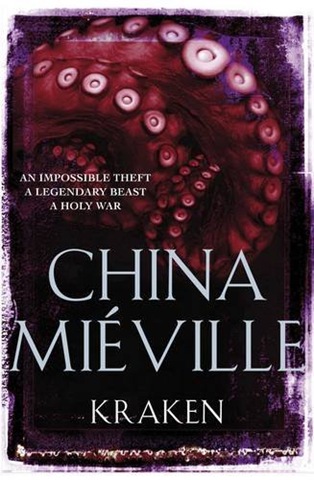
The Kraken, by China Mieville. (Be aware: book contains some vulgar language).
“An impossible theft. A legendary beast. A Holy War.
Deep in the research wing of the Natural History Museum is a prize specimen, something that comes along much less often than once in a lifetime: a perfect, and perfectly preserved, giant squid. But what does it mean when the creature suddenly and impossibly disappears? For curator Billy Harrow it’s the start of a headlong pitch into a London of warring cults, surreal magic, apostates and assassins. It might just be that the creature he’s been preserving is more than a biological rarity: there are those who are sure it’s a god.
A god that someone is hoping will end the world.”
A Canticle for Leibowitz, by Walter Miller Jr.
“Winner of the 1961 Hugo Award for Best Novel and widely considered one of the most accomplished, powerful, and enduring classics of modern speculative fiction, Walter M. Miller, Jr.’s A Canticle for Leibowitz is a true landmark of twentieth-century literature — a chilling and still-provocative look at a post-apocalyptic future.
In a nightmarish ruined world slowly awakening to the light after sleeping in darkness, the infant rediscoveries of science are secretly nourished by cloistered monks dedicated to the study and preservation of the relics and writings of the blessed Saint Isaac Leibowitz. From here the story spans centuries of ignorance, violence, and barbarism, viewing through a sharp, satirical eye the relentless progression of a human race damned by its inherent humanness to recelebrate its grand foibles and repeat its grievous mistakes. Seriously funny, stunning, and tragic, eternally fresh, imaginative, and altogether remarkable, A Canticle for Leibowitz retains its ability to enthrall and amaze. It is now, as it always has been, a masterpiece.”
Reading Resources for Canticle:
• Translations of Latin phrases in Canticle for Leibowitz
• An excellent study guide, with nifty notes and annotations on things mentioned in the book
Lent: A Novel of Many Returns by Jo Walton.
“Young Girolamo’s life is a series of miracles.
It’s a miracle that he can see demons, plain as day, and that he can cast them out with the force of his will. It’s a miracle that he’s friends with Pico della Mirandola, the Count of Concordia. It’s a miracle that when Girolamo visits the deathbed of Lorenzo “the Magnificent,” the dying Medici is wreathed in celestial light, a surprise to everyone, Lorenzo included. It’s a miracle that when Charles VIII of France invades northern Italy, Girolamo meets him in the field, and convinces him to not only spare Florence but also protect it. It’s a miracle than whenever Girolamo preaches, crowds swoon. It’s a miracle that, despite the Pope’s determination to bring young Girolamo to heel, he’s still on the loose…and, now, running Florence in all but name.
That’s only the beginning. Because Girolamo Savanarola is not who―or what―he thinks he is. He will discover the truth about himself at the most startling possible time. And this will be only the beginning of his many lives.”
Reading resources for Lent:
• apocatastasis (Gr. αποκαταστασις): The “restoration of all things” (cf. Acts 3:21) to a condition of perfection; possibly including the salvation of the damned, and even fallen angels (devils). This idea, although never fully embraced by either the Eastern or Western Church, captured the imagination of some fairly high-profile theologians such as Origen and Gregory of Nyssa.
• St. Gregory on apocatastasis
• Kallistos Ware (brilliant 20th c. Orthodox theologian) on apocatastasis, “Dare We Hope for the Salvation of All?“
• Art from Florence which inspired the author, from her own website.
Possible Future books:
Margaret Atwood, A Handmaid’s Tale.
James Blish, A Case of Conscience.
Octavia Butler, The Parable of the Sower.
Paul Cornell, The Witches of Lychford, and The Lost Child of Lychford.
Umberto Eco, The Name of the Rose.
Harlan Ellison, The Deathbird.
Michael Faber, The Book of Strange New Things.
Madeleine L’Engle, A Wrinkle in Time, etc.
Robert Heinlein, Job: A Comedy of Justice.
Robert Heinlein, Stranger in a Strange Land.
T. Kingfisher, The Paladin’s Grace.
C.S. Lewis, The Screwtape Letters.
C.S. Lewis, The Great Divorce.
C.S. Lewis, Perelandra (Book 2 of the Space Trilogy)
Emily St. John Mandel, Station 11.
Ursula K. LeGuin, The Lathe of Heaven.
Jeannette Ng, Under the Pendulum Sun.
Terry Prachett and Neil Gaiman, Good Omens.
Mary Doria Russell, The Sparrow (and sequel, Children of God).
Robert Sawyer, Calculating God.
Neal Stephenson, Anathem.
Connie Willis, The Doomsday Book.
Possible Future Short Stories
J. R. R. Tolkien, “Leaf, by Niggle”
Roger Zelazny, “A Rose for Ecclesiastes”
Get in touch!
Nominations for our next book? Want to get on the mailing list? Contact Fr. Andrew for more info: abenko@stmattsaustin.org.